
Ideas
A testing workbench for teams shipping agents
A developer product centered on replayable cases, visible tool behavior and release decisions a team can explain.
By Michael Santiago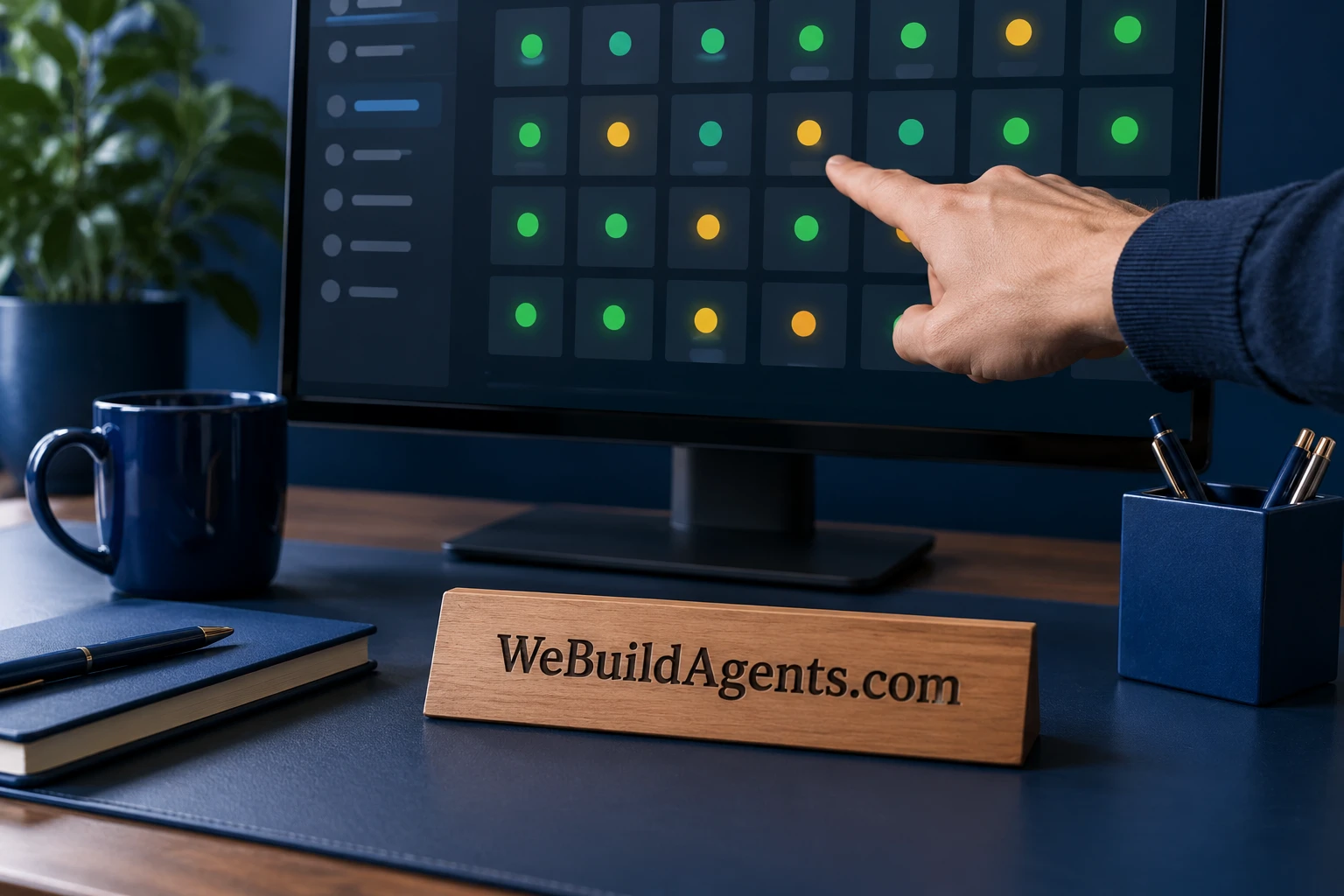
An agent can produce a convincing answer while taking the wrong route to get there. A developer reviewing only the final message may miss a tool call that should have required permission, a repeated action or a failure that disappeared behind a friendly explanation. A useful testing product would make that route inspectable.
This is an illustrative business concept for WeBuildAgents.com: a workbench that helps small development teams replay important cases and compare agent behavior before a release. I would begin with one supported integration and one painful review task. The first product should make a developer's next decision clearer.
Choose the release review as the first job
The buyer could be a technical lead responsible for an agent that prepares customer-support drafts. The team changes instructions frequently and wants to know whether a revision has broken previously acceptable behavior. Its first need is a repeatable way to run the same cases and inspect the differences.
The proposed workbench would hold a case library, expected boundaries and the results of each run. It would present the input beside the agent's actions, final output and any escalation. A reviewer could mark a result acceptable, rejected or needing investigation, with a short reason. That decision would remain attached to the particular version tested.
Avoid promising that a single score proves readiness. A result can pass a formatting check and fail an ownership check. A practical interface should show these judgments separately so a developer can tell whether a change fixed the original problem or simply moved it elsewhere.
Make ten cases useful before collecting a thousand
For the support-draft example, the opening library could contain a normal question, an incomplete request, conflicting account information and a request outside the agent's allowed work. Add cases involving a tool timeout, a duplicate request and a message containing instructions that should be treated as customer content rather than authority.
Complete the set with an unavailable reviewer, an attempted action requiring approval and a successful draft that should stop before sending. Each case should state what the agent is allowed to read or do. The expected answer need not be one exact sentence, but the acceptable behavior must be specific enough for another person to assess.
OpenAI's agent evaluation documentation describes datasets and trace grading as ways to evaluate workflows. A workbench could build on that general approach while concentrating its own product value on understandable review decisions. The documentation is a starting point for implementation, not evidence that this proposed product already exists or performs well.
Give failures a place to live
A failure report should preserve the input, configuration version, actions attempted and the point at which behavior departed from expectations. It should also record what the reviewer expected instead. Without that last piece, a saved failure can become an ambiguous screenshot that no one knows how to resolve.
Imagine the support agent drafts a reply using an outdated policy. The reviewer needs to see which document was retrieved and which version was available. If the correct policy was never accessible, revising the wording of the instructions may not address the problem. The workbench should help the team distinguish missing information from poor handling of information it already had.
A useful first screen could group failures by the boundary they crossed: wrong source, unauthorized action, missing escalation or unacceptable final draft. These are proposed product categories. Teams should be able to rename or extend them to reflect the responsibilities of their own agent.
Keep the first integration narrow
Execution would require a reliable way to capture the selected agent's inputs, outputs and relevant tool activity. The product would also need a clear approach to removing sensitive values from saved examples. A team may want to preserve the structure of a support case while replacing the customer's identifying details.
The first version could run against a sandbox with synthetic records. That limits the range of systems the product needs to support and makes demonstrations easier to share. Add production connections only when the access model, retention choices and customer responsibilities have been worked through.
Versioning is part of the core experience. Store enough configuration to explain why two runs differ, including the instructions and tool definitions being tested. If a dependency cannot be pinned, show that limitation in the result. A comparison should not suggest more repeatability than the underlying setup can provide.
Distribute through a useful public test pack
One credible path to early users would be an openly readable sample library for a specific agent task. Publish the fictional inputs, expected boundaries and reviewer notes. A developer should gain something from the material before opening an account. The product can then make running and maintaining that library easier.
A short demonstration could compare two instruction versions on the same ten cases. Show a mixed result, including a case that still needs work. The value lies in helping the developer understand the change. Any claims about speed or detection quality would need evidence from the actual product before appearing in its marketing.
WeBuildAgents.com could suit a tool aimed at people actively constructing agents, especially if the product language emphasizes shared engineering work. A precise product subtitle would explain that this particular business focuses on testing. The broad name leaves room for related developer tools, but the first release should earn its place through one useful job.
Begin by writing the ten-case library for an agent you can inspect. Ask another developer to review the expected outcomes without coaching. Where the two of you disagree, improve the case definition before building more interface. If this is the direction you would pursue with WeBuildAgents.com, describe it in a private acquisition inquiry.